• BUSINESS
    • FINANCE
    • LEGAL
    • RETAIL & CONSUMER
    • AUTOS & TRANSPORTATION
    • HEALTHCARE & PHARMACEUTICALS
    • MEDIA & TELECOM
    • AEROSPACE AND DEFENSE
    • ENERGY
  • MARKETS
    • EUROPEAN MARKETS
    • ASIAN MARKETS
    • U.S. MARKETS
    • COMMODITIES
    • EMERGING MARKETS
    • DEALS
    • RATES & BONDS
  • WORLD
    • UNITED STATES
    • EUROPE
    • UNITED KINGDOM
    • ASIA PACIFIC
    • MIDDLE EAST
    • AFRICA
    • CHINA
    • INDIA
    • JAPAN
    • AMERICAS
    • FRANCE
    • GERMANY
  • POLITICS
    • GOVERNMENT
    • UNITED STATES
    • US SUPREME COURT
  • TECH
    • ARTIFICIAL INTELLIGENCE
    • CYBERSECURITY
    • SPACE
    • DISRUPTED
  • COMMENTARY
  • BREAKINGVIEWS
    • BREAKINGVIEWS PREDICTIONS
  • MONEY
    • WEALTH
    • FUNDS
    • ETFS
  • LIFE
    • LIFESTYLE
    • SPORTS
    • SCIENCE
  • SECTORS
    • ENERGY
    • HEALTHCARE
    • MEDIA & TELECOM
    • SUSTAINABILITY
    • ENVIRONMENT
    • RETAIL & CONSUMER
    • AUTOS & TRANSPORTATION
    • AEROSPACE AND DEFENSE
FinanceTime
  • August 19th, 2026

FinanceTimeFinancetime

  • BUSINESS
    • FINANCE
    • LEGAL
    • RETAIL & CONSUMER
    • AUTOS & TRANSPORTATION
    • HEALTHCARE & PHARMACEUTICALS
    • MEDIA & TELECOM
    • AEROSPACE AND DEFENSE
    • ENERGY
  • MARKETS
    • EUROPEAN MARKETS
    • ASIAN MARKETS
    • U.S. MARKETS
    • COMMODITIES
    • EMERGING MARKETS
    • DEALS
    • RATES & BONDS
  • WORLD
    • UNITED STATES
    • EUROPE
    • UNITED KINGDOM
    • ASIA PACIFIC
    • MIDDLE EAST
    • AFRICA
    • CHINA
    • INDIA
    • JAPAN
    • AMERICAS
    • FRANCE
    • GERMANY
  • POLITICS
    • GOVERNMENT
    • UNITED STATES
    • US SUPREME COURT
  • TECH
    • ARTIFICIAL INTELLIGENCE
    • CYBERSECURITY
    • SPACE
    • DISRUPTED
  • COMMENTARY
  • BREAKINGVIEWS
    • BREAKINGVIEWS PREDICTIONS
  • MONEY
    • WEALTH
    • FUNDS
    • ETFS
  • LIFE
    • LIFESTYLE
    • SPORTS
    • SCIENCE
  • SECTORS
    • ENERGY
    • HEALTHCARE
    • MEDIA & TELECOM
    • SUSTAINABILITY
    • ENVIRONMENT
    • RETAIL & CONSUMER
    • AUTOS & TRANSPORTATION
    • AEROSPACE AND DEFENSE
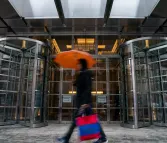
A security guard stands outside of the entrance of the Silicon Valley Bank headquarters in Santa Clara, California, U.S., March 13, 2023. Brittany Hosea-Small
Home
Business
Finance

Bank regulators promise better oversight after collapses

April 21st, 2023 | 21:02 PM BUSINESS Finance 5

Facebook Twitter Google+ LinkedIn Pinterest

Worth reading...

US appeals court revives Signature Bank collapse lawsuit despite FDIC objection
Lyntris valued at $1.8 billion after shares fall in New York debut
EFG sells UK wealth management business Harris Allday to Canaccord
Monte dei Paschi board to discuss takeover defence options on Thursday
By Chris Prentice, Ann Saphir, Hannah Lang

U.S. regulators on Friday put large banks on notice that tougher oversight is coming, after the Federal Reserve and Federal Deposit Insurance Corporation detailed their supervisory lapses before deposit runs caused the collapse of Silicon Valley Bank and Signature Bank in March.

Though the banking sector broadly has since stabilized, the far-reaching impact of the failures of those two large regional banks was felt on Friday as an even larger lender, First Republic Bank (FRC.N), teetered on the brink of collapse.

Regulators were preparing to shut San Francisco-based First Republic, a person familiar with the matter told Reuters. Depositors had pulled $100 billion from accounts at the bank in the panic triggered by the SVB and Signature failures, imperiling its survival.

The Fed's assessment of its inadequacies in identifying problems and pushing for fixes at Santa Clara, California-based SVB came with promises for tougher supervision and stricter rules for banks.

"Our first area of focus will be to improve the speed, force, and agility of supervision," Fed Vice Chair of Supervision Michael Barr said in a letter accompanying a 114-page report supplemented by confidential materials that are typically not made public and which documented rising concern - but little action - over lax risk management.

Barr also signaled plans to subject banks with more than $100 billion in assets to rules currently reserved for bigger rivals, given that increased capital and liquidity requirements would have bolstered SVB's resilience. "Our experience following SVB's failure demonstrated that it is appropriate to have stronger standards apply to a broader set of firms."

Separately, the FDIC delivered a 63-page account of its failings in the collapse of Signature, and those of the New York-based lender's management, to fix persistent weaknesses in liquidity risk management and over-reliance on uninsured deposits. Both SVB and Signature failed last month.

"In retrospect, the FDIC could have acted sooner and more forcefully to compel the bank's management and its board to address these deficiencies more quickly and more thoroughly," it said.

Both reports said the banks' managers were primarily to blame for prioritizing growth and ignoring basic risks that set the stage for the failures.

And while they both identified supervisory misjudgments - the Fed's report was particularly scathing - both stopped short of laying the responsibility for the failures at the feet of any specific senior leaders inside their oversight ranks.

The FDIC did point to Signature's ex-CEO Joseph DePaolo, though not by name, as having personally "rejected" examiner concerns about uninsured depositors on March 10, the day of the bank's crippling run. Former SVB CEO Greg Becker was mentioned only once in the Fed's report - in reference to his having also been on the board of directors at the San Francisco Fed.

REACTION

Before the twin failures in March, banking regulators had focused most of their firepower on the very biggest U.S. banks that were seen as critical to financial stability.

At the Fed that was in part due to new central bank "tailoring" regulations written in 2018 under Barr's predecessor, Randal Quarles, the report said, and to a shift in expectations for supervisors to accumulate more evidence before considering taking action. Fed staff said they felt pressure during this period to reduce burdens on firms and demonstrate due process, according to the report.

Quarles did not immediately respond to a request for comment.

The lack of forceful examiner action was a "clear failure of supervisory culture," said Senator Tim Scott, the top Republican on the Senate Banking Committee. Scott, a potential U.S. presidential candidate in 2024, pushed back on re-imposing stricter rules that he said would punish well-run banks for the "unique" problems of their failed competitors.

Industry did as well.

"The Federal Reserve's report lays blame at changes to regulation and supervision made in recent years, when its own examination materials make plain the fundamental misjudgments made by its examination teams over that same period," Greg Baer, the president and CEO of the Bank Policy Institute, said in a statement.

Still, any changes would give banks plenty of time to adjust, noted Eric Compton, a banking analyst at Morningstar. "I think many investors were worried about the regulators dropping the hammer on the whole banking industry, quickly."

'POOR MANAGEMENT'

At SVB, the Fed said, supervisors did not fully appreciate the problems and failed to appropriately escalate certain deficiencies even after they were identified.

At the time of its failure, SVB had 31 unaddressed citations on its safety and soundness, triple what its peers in the banking sector had, the U.S. central bank's report said, including problems with interest-rate-risk modeling that examiners directed be addressed by June 2023.

Regulators shut SVB on March 10, a day after customers withdrew $42 billion and queued requests for another $100 billion the following morning.

The Fed is considering forcing better compliance from management by tying prompt fixes to executive compensation, a senior Fed official indicated on Friday.

Both SVB and Signature grew quickly in recent years, outpacing the ability of regulators to keep up, especially with shrinking resources.

Between 2016 and 2022, as assets in the banking sector grew 37%, the Fed's supervision headcount declined by 3%, according to the report.

In regards to Signature since 2020, an average of 40% of positions in the FDIC's large bank supervisory staff in the New York region were vacant or filled by temporary employees, the FDIC report said.

Signature's failure, the FDIC said in its report, was caused by "poor management" and a pursuit of "rapid, unrestrained growth" with little regard for risk management.
Regulators closed Signature two days after SVB was shuttered. Signature lost 20% of its total deposits in a matter of hours on the day that SVB failed, FDIC Chair Martin Gruenberg has said.

  • Topic
  • USA
  • BANKS/ (WRAPUP 6, PIX)
Facebook Twitter Google+ LinkedIn Pinterest
Previous article US appeals court revives Signature Bank collapse lawsuit despite FDIC objection

Related Posts

Finance
August 19th, 2026

US appeals court revives Signature Bank collapse lawsuit despite FDIC ob...

Finance
August 19th, 2026

Lyntris valued at $1.8 billion after shares fall in New York debut

Finance
August 19th, 2026

EFG sells UK wealth management business Harris Allday to Canaccord

Finance
August 19th, 2026

Monte dei Paschi board to discuss takeover defence options on Thursday

Finance
August 19th, 2026

Alphabet raises $3.9 billion in inaugural Australian dollar bond

Finance
August 19th, 2026

Investors set sights on Swiss franc for popular carry trades after yen i...

The Wire
Aug 19th 3 h ago
Government

DOJ argues Comey novel shows he knew ‘86 47’ post was a thr...

Aug 19th 3 h ago
Business

Fed policymakers' inflation concerns increased at July meet...

Aug 19th 3 h ago
Sports

Swiss rider Poncini dies in Manx GP qualifying

Aug 19th 3 h ago
Business

Amazon plans drone delivery expansion to about 500 US local...

Aug 19th 3 h ago
Litigation

Abbott settles appeal over $495 million infant formula verd...

TRENDING ON FINANCETIME
Aug 19th, 2026 Sports

Mets' Jorge Polanco (ankle) to have season-ending surgery

Aug 19th, 2026 Sports

Reports: Phillies sign free agent LHP Nestor Cortes

Aug 19th, 2026 Business

US CFTC seeks comment on compute derivatives as AI demand grows

Aug 19th, 2026 Technology

Payments firm Stripe to buy AI developer platform OpenRouter

Aug 19th, 2026 Government

ABC says intimidation by Trump's FCC forced programming changes

Markets-Sectors
ENERGY -0.01%

  • BUSINESS
  • MARKETS
  • WORLD
  • POLITICS
  • TECH
  • COMMENTARY
  • BREAKINGVIEWS
  • MONEY
  • LIFE
  • SECTORS
  • Back to top
FinanceTime
FinanceTime

World Business & Financial News, Breaking US & International News

Additional Services
  • Privacy-Policy
  • Terms and Conditions
© Financetime.org 2026. All rights reserved. Hosted by LeadsDeposit.com
Produced by C-iT