

Well past midnight one day this spring, three police officers pulled up to a nightclub where a man was stomping on a young woman lying on the sidewalk.
The officers stopped the attack and arrested him, according to a police report. It was the kind of assault police might encounter on almost any night in almost any city.
But one detail stood out to police officer Xavier Jimenez, who wrote the report: “There was approximately 15 national guard members in the area on routine patrol who did not take any action.”
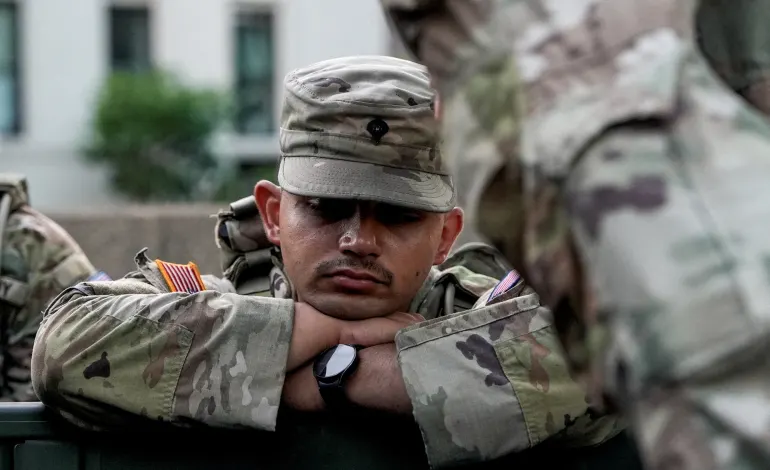
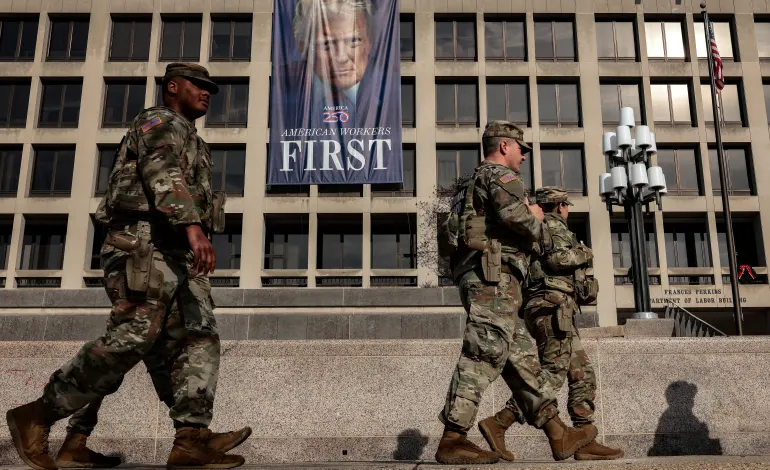
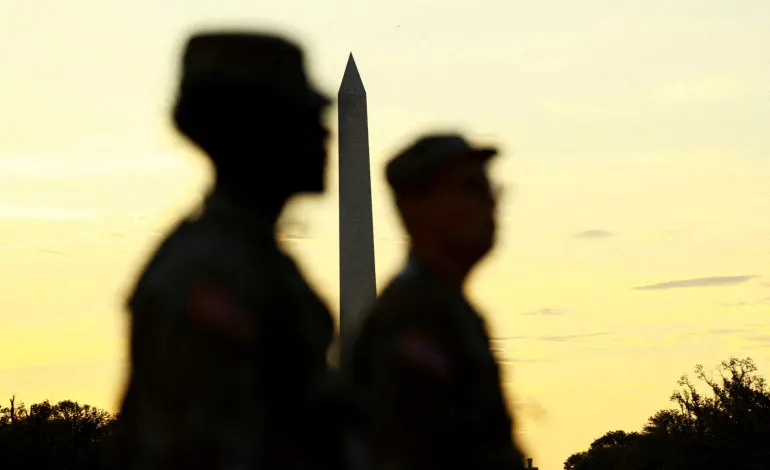
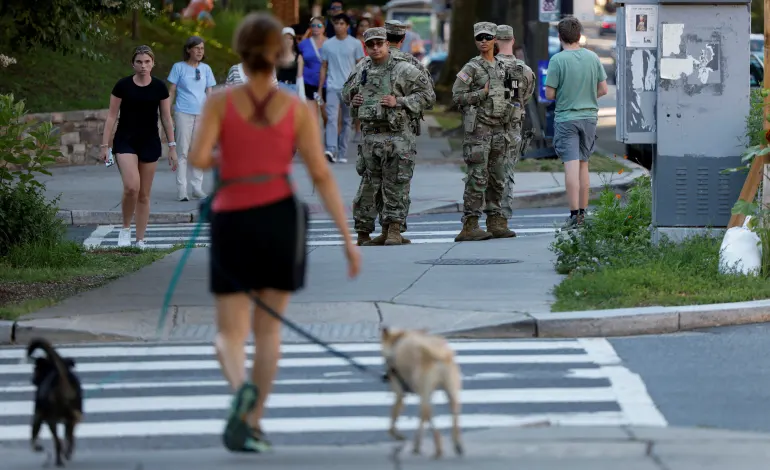
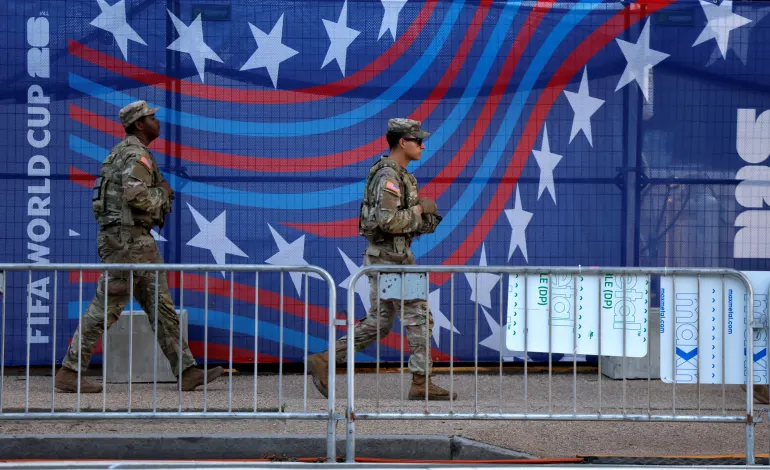
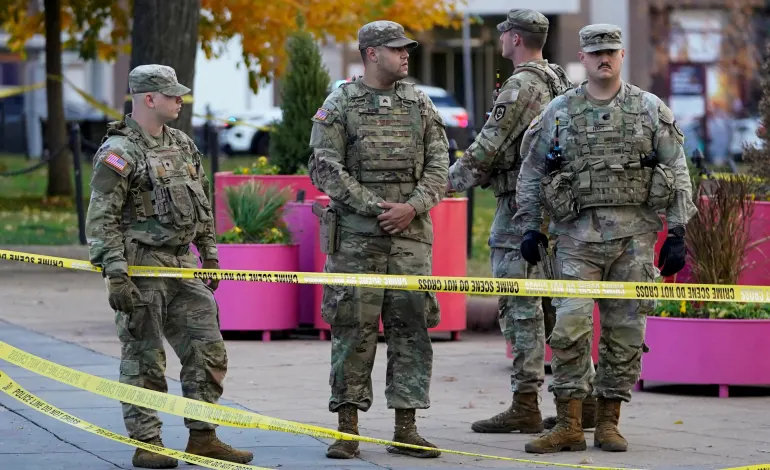
President Donald Trump deployed thousands of National Guard troops to Washington last summer as the centerpiece of what he describes as a no-holds-barred effort to combat crime, especially in cities run by Democrats. Every day, small clots of soldiers in camouflage and body armor patrol tourist-heavy areas of the U.S. capital, including national monuments, subway stations and the area around its professional baseball park.
What the soldiers seldom do, Reuters found, is fight crime.
Since their arrival last August, the National Guard soldiers Trump ordered to Washington have been mentioned in only a tiny fraction — about 1.3% — of the criminal cases filed in the Superior Court of the District of Columbia, which handles nearly all the city’s criminal prosecutions. In dozens of cases, the soldiers appear not as people making the arrests but as victims of crime.
The roughly 4,500 soldiers currently deployed to Washington outnumber its 3,200 police officers. And they cost more: The Trump administration last year told Congress that sending guardsmen to the capital cost about $1.65 million a day – before officials doubled the number of troops this summer. The city’s most recent police budget was about $1.5 million daily.
The administration told Congress it plans to keep sending soldiers to Washington – though it has not said how many – until the end of Trump’s presidency in 2029 at a cost of $1.4 billion.
To gauge the impact of that deployment, Reuters reviewed every publicly available charging document filed in Superior Court and interviewed lawyers, residents, service members and others who are familiar with their work.
The soldiers mostly responded to minor incidents in neighborhoods that are wealthier, whiter and less dangerous than the rest of the capital, Reuters found after comparing court records to the city’s demographics and crime information. Reuters could find no reference in court records to soldiers doing any kind of law enforcement in the neighborhoods where about 82% of the city’s 859 murders occurred over the past five years.
The White House did not respond to questions about soldiers’ work. Spokeswoman Lauren Bis said Trump’s efforts in the city have “driven down crime, beautified the city, and improved quality of life for countless individuals.”
D.C. Mayor Muriel Bowser, who has called the deployment “problematic,” declined to comment, as did the city’s police department.
The National Guard taskforce managing the Washington deployment did not respond to questions about its work or its cost. A spokeswoman, Leona Hendrickson, said soldiers were too busy to be interviewed.
Although soldiers have sometimes broken up fights or assaults, many of the crimes for which they detained people have been minor. In October, soldiers chased down a man who had taken two slices of pizza and offered $2 as partial payment, according to police records. A week later, they stopped a man who threw a rock at a bus. In April, they detained a man who allegedly stole two beef jerky sticks worth about $7 from a pharmacy, according to the report. Last month, six soldiers held a woman who drank a bottle of root beer without paying.
The Rev. William Young, who lives in the Navy Yard neighborhood where soldiers patrol frequently, laughed when asked whether the troops made him feel safer. “It’s a way of keeping fear in all of us,” he said. “This is not how a capital of democracy should be protected, by having soldiers marching to protect the streets.”
‘THEY COULD HAVE DONE MORE’
Reuters found 217 criminal cases in Washington in which police mentioned the involvement of the National Guard. In about a quarter of them, 62 cases, soldiers single-handedly stopped people suspected of a crime, often for things like shoplifting or jumping turnstiles to avoid paying subway fare. In another 43 cases, soldiers helped police officers arrest someone.
Videos obtained by community groups also show troops in groups of 20 or more stationed outside subway stations at night, blocking teens from descending the escalators to enforce a city curfew.
“It’s like they brought people here from all across the country, just to be here. And they harass people a lot more than they are actually doing police work,” said the Rev. Norman Nixon, the pastor of the Union Temple Baptist Church.
Although the guardsmen have been deputized as U.S. Marshals, according to government records, they have limited law-enforcement power. The Defense Department has described their work as “presence patrols,” a show of force meant to deter crime rather than respond to it. They can detain suspects, but then must call police officers to make a formal arrest.
Court records describe 35 instances in which the troops were witnesses to crimes, sometimes simply watching until police officers arrived. They have told officers about a drug deal, a man urinating in public, another who exposed himself to a subway policeman and two men writing with chalk on a monument outside the city’s train station, one of them wearing a banana costume.
Evelyn Jones said she wonders whether soldiers could have saved her nephew, Keon Jones, who was stabbed to death in April near a trendy strip of hotels and restaurants on the city’s waterfront.
The soldiers called emergency services after finding Jones unresponsive after a fight. They later told police they thought Jones was merely intoxicated. They did not realize, until after officers reached the scene, that he had been stabbed so severely his intestines were spilling out. He died in hospital about two hours later.
“They could have done more to help him,” his aunt said.
The service members themselves have often been victims, a fact underscored last year when two soldiers from West Virginia were shot not far from the White House, killing one of them.
Reuters found 62 cases in which people were charged with pushing, punching or threatening soldiers. Nine were accused of spitting on the soldiers. One man allegedly tried to grab a soldier’s pistol as the soldier tried to arrest him for stealing baseball caps in a subway station. Another man was charged after he told a group of soldiers that he wanted to “shoot you, in between your balls, with a bazooka,” according to a police report.
And twice, police in Washington arrested off-duty soldiers for violating the city’s firearms laws, though the U.S. Attorney’s Office dropped the charges against both of them.
This summer, they took on a new mission: guarding the Lincoln Memorial Reflecting Pool, which the Trump administration spent millions of dollars to renovate only to see it turn green with algae as its liner peeled away. Trump claimed the pool was sabotaged by vandals. But U.S. Attorney for the District of Columbia Jeanine Pirro eventually conceded that a government contractor “botched” the job.
PATROLLING SAFER NEIGHBORHOODS
The U.S. has long used National Guard soldiers to respond to disasters, help secure major events like the Super Bowl and occasionally quell riots, but they haven't been used for everyday crime-fighting. Trump also authorized smaller deployments in Memphis and New Orleans and has mused about sending soldiers to other cities.
“You do not want armed soldiers on the streets of America,” said Gen. Randy Manner, who retired in 2012 as the second-in-command of the National Guard Bureau. He said soldiers are ill-prepared for police work and more expensive than hiring more police officers.
Determining the soldiers’ impact on crime in Washington is not straightforward. In addition to the soldiers, the Trump administration sent hundreds of extra federal agents into the city, who largely functioned as local police officers.
The number of murders in Washington fell for the third consecutive year. But homicide numbers also dropped in cities where the government has not sent soldiers or additional federal agents. And the total number of violent crimes — serious assaults, robberies and sex offenses in addition to homicides — reported by city police between January and mid-August is marginally higher than last year, about 4%.
Charles Stimson, a senior fellow at the pro-Trump Heritage Foundation, said the soldiers’ visibility served as a deterrent. “When you’re speeding and you see a cop, you slow down,” he said. “If those National Guard went poof and left town tomorrow, crime would go up.”
The Reuters review of court records found little evidence of soldiers’ presence in high-crime neighborhoods where they might have responded to more serious crimes.
Instead, the court records show soldiers were more likely to be mentioned in arrest records in city neighborhoods that have higher incomes, in which more people have college degrees, and where more people are white. Most of the arrests in which soldiers participated were either near the city’s core or its subway stops.
Reuters used the location of incidents in court records to identify the areas in which soldiers were either assisting the police or seeking help from them, then compared those neighborhoods to the rest of the city. That does not account for places soldiers might have been sent if they did not interact with law enforcement there. But it suggests that their presence was not aimed at quelling the violent crime that had ravaged parts of the city in the past.
Salim Adofo, an outreach coordinator with the Anacostia Coordinating Council, a nonprofit operating in a low-income part of the city, said that matched his experience.
“I haven’t seen them all year,” he said.


