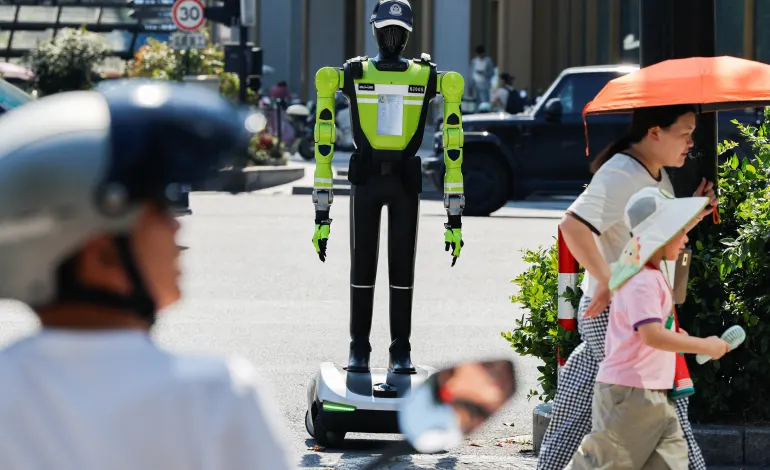
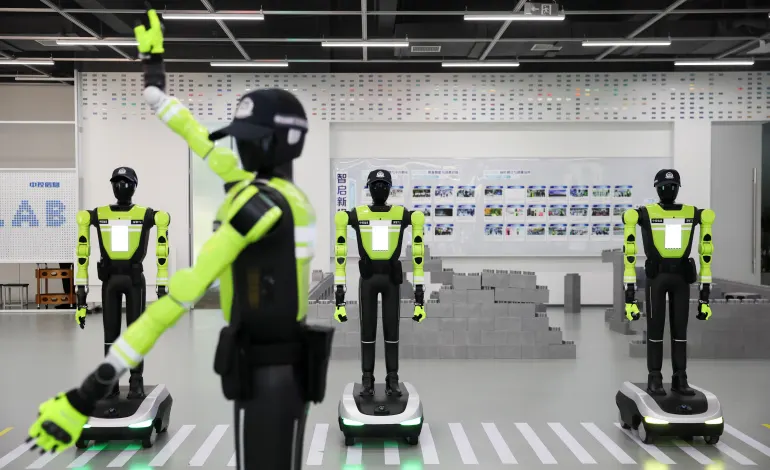
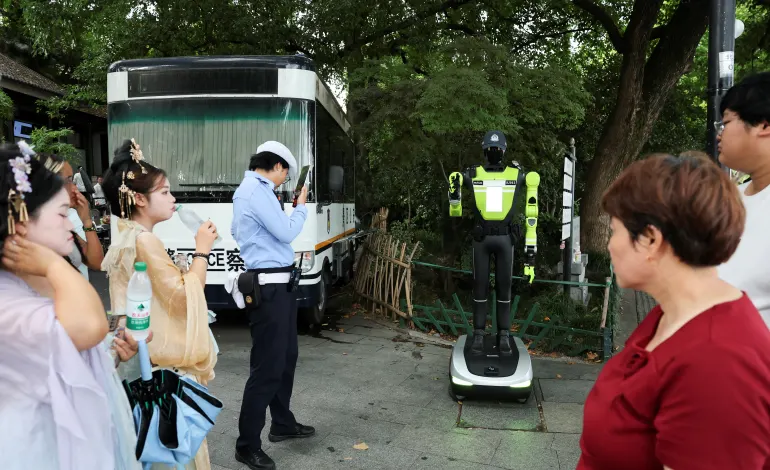
It is not quite the "RoboCop" of the 1987 movie: no gun, no power to arrest and wheels rather than the Hollywood cyborg's mechanical stride.
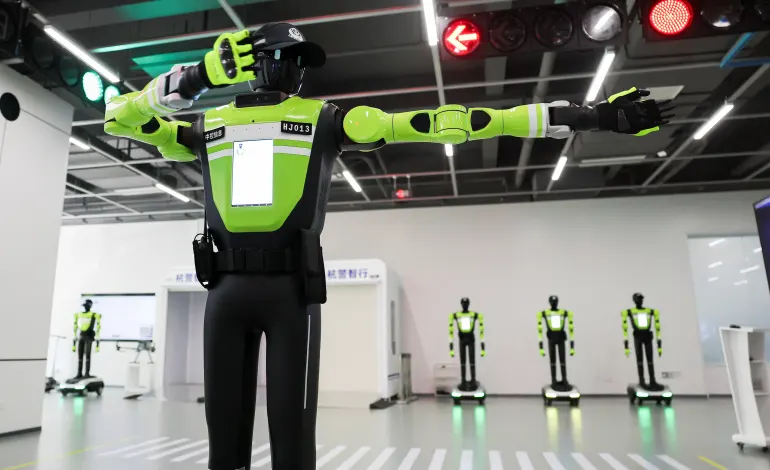
But at a busy intersection in the eastern Chinese city of Hangzhou, the 1.88-m (6-foot-2-inch) robot can spot a helmetless e-bike rider, issue a polite warning and swing its mechanical arms in sync with traffic lights.
Developed by local technology firm SUPCON Information, the 98-kg (216-pound) T2 robot is part of a pilot aimed at handing some of police officers' most repetitive traffic-control duties to machines.
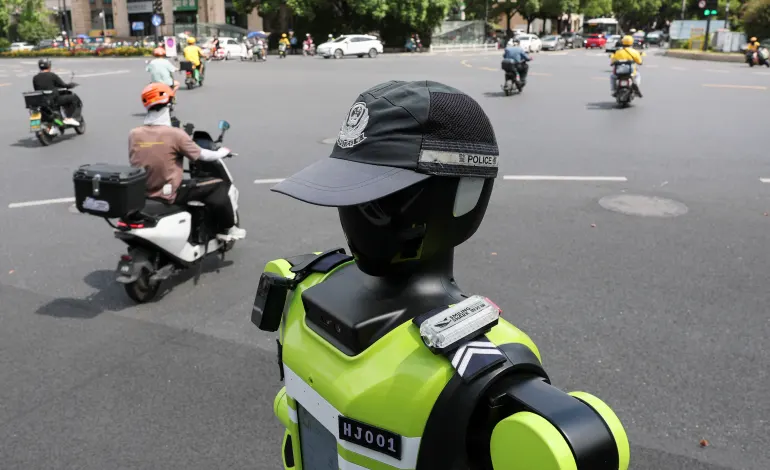
The robocop uses cameras, radar and onboard computing to identify riders without helmets, e-bikes carrying passengers, vehicles stopping over marked lines and pedestrians crossing against signals, SUPCON's intelligent unmanned systems innovation centre head Cao Hui said in an interview.
The traffic robots represent a broader Chinese industry push to move machines beyond exhibition-floor acrobatics and showroom greetings into practical jobs.
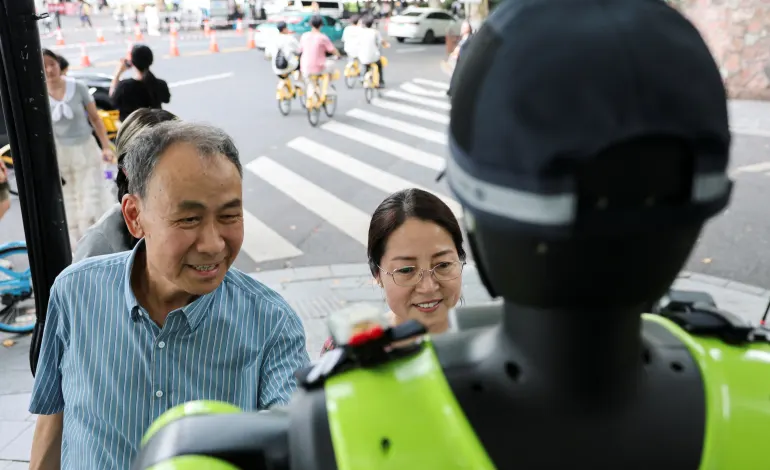
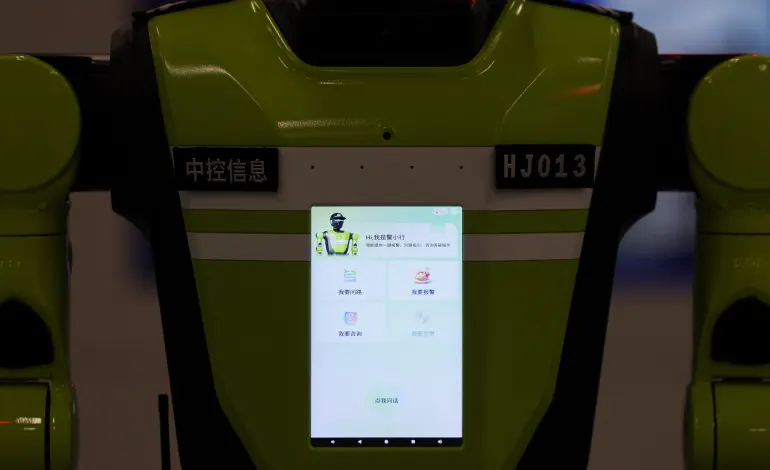
The robots can also answer questions about directions, parking and traffic rules, while an emergency function connects users with local police. Their seven-jointed arms reproduce standard traffic-police gestures synchronised with the signals, Cao said.
SUPCON has deployed 15 robots in Hangzhou since May. The company says they have issued more than 170,000 warnings and helped reduce monthly cases of helmetless riding and vehicles crossing stop lines by more than 40%.
Hangzhou's traffic police did not respond to a request for comment, and Reuters could not independently verify the figures.
ROBOCOPS NEVER NEED A BREAK
The company has tested the machines for thousands of hours in tourist areas, school zones, business districts, rush-hour traffic and poor weather, Cao said.
Cameras and radar can still be affected by strong sunlight, rain and temperature extremes, though SUPCON says its violation-recognition accuracy exceeds 95%.
The aim, Cao said, is to replace punishment after a violation with a timely reminder before behaviour becomes habitual.
"It doesn't get tired," he said of the robot. "It can work steadily for long periods."
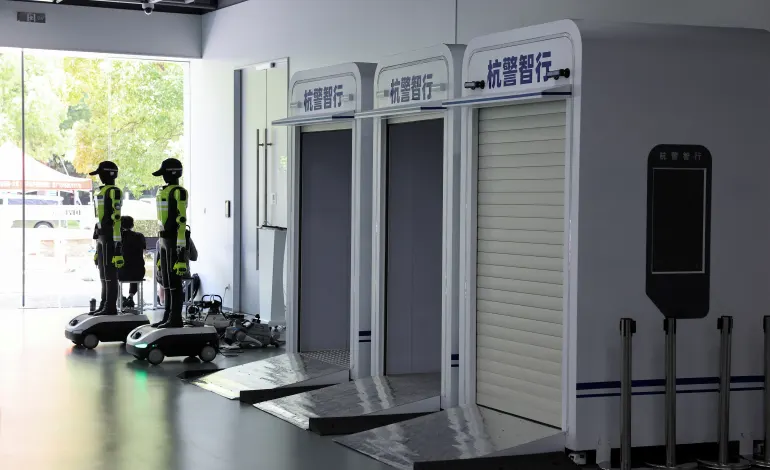
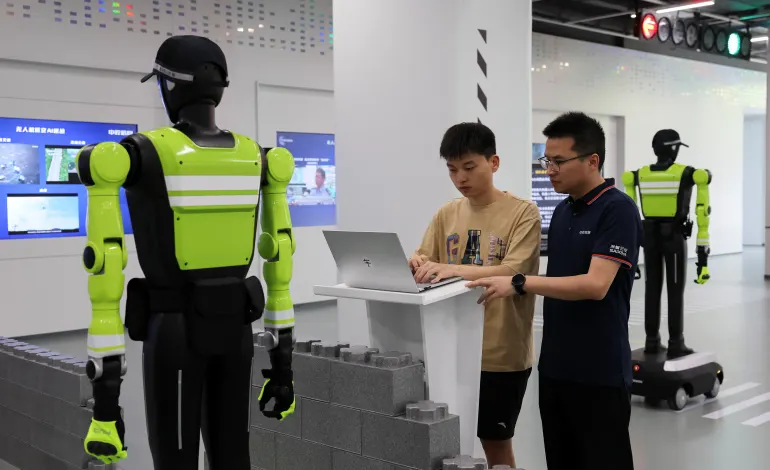
Cao said the robots operate autonomously from 7 a.m. to 6 p.m., moving between pre-set positions at intersections without remote control. A central platform allows traffic-police teams to monitor and dispatch them.
SUPCON says nearly 50 such robots are operating across about eight cities in three Chinese provinces, and it expects deployments to approach 200 by year-end.
ROBOCOP EXPORTS HAVE POTENTIAL BUT HURDLES AHEAD
Chery-backed robotics company AiMOGA sees potential for police robots in overseas markets where traffic officers face punishing roadside conditions, citing high temperatures in the Middle East and persistent rainy seasons in Southeast Asia.
But AiMOGA executive Zhang Guibing said deploying them abroad would be more complicated than exporting a car.
Police robots would need to fit local law-enforcement IT systems, obtain certifications and comply with data-protection rules, Zhang said, particularly because they use cameras and other sensors.