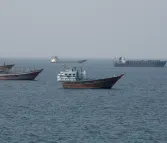
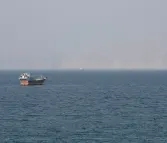
Most Gulf stock markets were subdued in early trade on Monday as stalled U.S.-Iran diplomacy revived fears of a prolonged Middle East conflict, while reduced traffic through the Strait of Hormuz added to concerns over energy supplies and trade flows.
Tensions remained high after Iran on Saturday urged Washington to "accept defeat," while U.S. President Donald Trump called Tehran "very evil" and urged Americans to prepare for sustained high fuel prices.
With no meaningful progress towards peace talks, shipping through the strategic waterway remained severely disrupted. Trump also said he would soon declare the Strait of Hormuz a U.S. territory.
Saudi Arabia's benchmark stock index (.TASI) eased 0.2%, dragged down by a 0.5% fall in Al Rajhi Bank (1120.SE) and a 0.5% decline in oil major Saudi Aramco (2222.SE).
The kingdom's Civil Defense said on Sunday that the danger in Jazan province had passed, according to a post on X. It had earlier issued an alert warning residents of a potential danger in the area.
In Qatar, the benchmark stock index (.QSI) declined 1%, with almost all constituents trading in negative territory. Qatar National Bank (QNBK.QA), the Gulf's biggest lender, retreated 1.8%.
Shipping activity through the strait slowed markedly over the weekend in the wake of last week's tanker attacks. Kpler ship-tracking data showed that only five commodity vessels transited the waterway on Saturday, while none were recorded on Sunday, compared with 31 during the previous weekend.
Dubai's main share index (.DFMGI) eased 0.1%, with top lender Emirates NBD (ENBD.DU) losing 1.3%.
In Abu Dhabi, the index (.FTFADGI) was up 0.1%, helped by a 14.9% surge in Abu Dhabi Ports (ADPORTS.AD) after wealth fund L'IMAD unveiled plans to take the firm private.
L'IMAD, which owns 75.42% of AD Ports through its wholly owned subsidiary ADQ, has launched a voluntary conditional cash offer to acquire the remaining shares at 6.25 dirhams apiece, it said in a statement.