• BUSINESS
    • FINANCE
    • LEGAL
    • RETAIL & CONSUMER
    • AUTOS & TRANSPORTATION
    • HEALTHCARE & PHARMACEUTICALS
    • MEDIA & TELECOM
    • AEROSPACE AND DEFENSE
    • ENERGY
  • MARKETS
    • EUROPEAN MARKETS
    • ASIAN MARKETS
    • U.S. MARKETS
    • COMMODITIES
    • EMERGING MARKETS
    • DEALS
    • RATES & BONDS
  • WORLD
    • UNITED STATES
    • EUROPE
    • UNITED KINGDOM
    • ASIA PACIFIC
    • MIDDLE EAST
    • AFRICA
    • CHINA
    • INDIA
    • JAPAN
    • AMERICAS
    • FRANCE
    • GERMANY
  • POLITICS
    • GOVERNMENT
    • UNITED STATES
    • US SUPREME COURT
  • TECH
    • ARTIFICIAL INTELLIGENCE
    • CYBERSECURITY
    • SPACE
    • DISRUPTED
  • COMMENTARY
  • BREAKINGVIEWS
    • BREAKINGVIEWS PREDICTIONS
  • MONEY
    • WEALTH
    • FUNDS
    • ETFS
  • LIFE
    • LIFESTYLE
    • SPORTS
    • SCIENCE
  • SECTORS
    • ENERGY
    • HEALTHCARE
    • MEDIA & TELECOM
    • SUSTAINABILITY
    • ENVIRONMENT
    • RETAIL & CONSUMER
    • AUTOS & TRANSPORTATION
    • AEROSPACE AND DEFENSE
FinanceTime
  • August 22nd, 2026

FinanceTimeFinancetime

  • BUSINESS
    • FINANCE
    • LEGAL
    • RETAIL & CONSUMER
    • AUTOS & TRANSPORTATION
    • HEALTHCARE & PHARMACEUTICALS
    • MEDIA & TELECOM
    • AEROSPACE AND DEFENSE
    • ENERGY
  • MARKETS
    • EUROPEAN MARKETS
    • ASIAN MARKETS
    • U.S. MARKETS
    • COMMODITIES
    • EMERGING MARKETS
    • DEALS
    • RATES & BONDS
  • WORLD
    • UNITED STATES
    • EUROPE
    • UNITED KINGDOM
    • ASIA PACIFIC
    • MIDDLE EAST
    • AFRICA
    • CHINA
    • INDIA
    • JAPAN
    • AMERICAS
    • FRANCE
    • GERMANY
  • POLITICS
    • GOVERNMENT
    • UNITED STATES
    • US SUPREME COURT
  • TECH
    • ARTIFICIAL INTELLIGENCE
    • CYBERSECURITY
    • SPACE
    • DISRUPTED
  • COMMENTARY
  • BREAKINGVIEWS
    • BREAKINGVIEWS PREDICTIONS
  • MONEY
    • WEALTH
    • FUNDS
    • ETFS
  • LIFE
    • LIFESTYLE
    • SPORTS
    • SCIENCE
  • SECTORS
    • ENERGY
    • HEALTHCARE
    • MEDIA & TELECOM
    • SUSTAINABILITY
    • ENVIRONMENT
    • RETAIL & CONSUMER
    • AUTOS & TRANSPORTATION
    • AEROSPACE AND DEFENSE
The Federal Reserve building in Washington, U.S., January 26, 2022. Joshua Roberts
Home
Markets
U.s. Markets

Fed concerns rise as tariff threats ratchet higher and wider

February 19th, 2025 | 11:03 AM MARKETS U.S. Markets 5

Facebook Twitter Google+ LinkedIn Pinterest

Worth reading...

Fed's Musalem says on CNBC he won't prejudge rate call view for September FOMC
Mapping the Market: A breather, then more gains for US tech shares
China's central bank pledges timely new policy rollout
Inflation is the biggest problem, Fed's Goolsbee says
By Howard Schneider

U.S. Federal Reserve officials remain uncertain about the impact tariffs might have on inflation, but have begun outlining more serious risks to supply chains, public expectations and ultimately prices as the scope of the Trump administration's plans for import taxes has become clearer.

The trade war touched off during President Donald Trump's first term eventually prompted the Fed to lower interest rates because, rather than feeding inflation, the global and U.S. growth outlook began to dim.

But with a high inflation episode still top of mind, consumers still spending, and higher sensitivity at the Fed to how supply disruptions can create persistent inflation, the sweep and extent of Trump's plans are causing concern.

The administration's piecemeal approach may in particular be damaging, Fed officials say, as businesses and consumers adjust to an outlook that seems both unpredictable and primed for higher prices.

Trump has so far raised the levy on Chinese goods, delayed others on Mexico and Canada, set tariffs on imported steel and aluminum starting next month, and directed his team to draw up duties for any country imposing them on U.S. goods, and more actions may follow. Fed officials worry the moves could cause a surge in public expectations about inflation that would threaten more chronic price hikes in the future.

“Most tariffs lead to a one-time shock and then the world moves on," Atlanta Fed President Raphael Bostic said earlier this month. But if debate, implementation and retaliation spool out over time and start to affect inflation expectations, "it would be appropriate to respond" through monetary policy.

Not all Fed officials are as concerned.

Fed Governor Christopher Waller said on Monday he does not expect tariffs to trigger persistent inflation and believes central bankers should respond to the data in front of them. Waiting for perfect certainty even in volatile times "is a recipe for policy paralysis," Waller said.

Minutes of the Fed's January meeting due on Wednesday may provide more detail about officials' debates about Trump's promised agenda. The meeting occurred just a week after Trump's inauguration, but uncertainty was already rising and added to policymakers' reluctance to cut interest rates further until they had more information on how Trump's policies would affect the economy.

'SUPPRESSIVE EFFECT'

Administration officials argue their plans, which also include tax cuts, deregulation and crackdowns on immigration, will ultimately lower inflation, a view not widely shared by economists.

A recent paper by Boston Fed researchers concluded that tariffs of 25% on Mexico and Canada and 10% on China would add 0.8 percentage point to inflation, a blow to the Fed's outlook.

But that estimate, the paper noted, did not include the myriad adjustments that tariffs would trigger: Consumers may substitute goods or cut demand; businesses may eat the cost or pass it on; other countries may retaliate; and global exchange and interest rates will adjust. "We would expect (such dynamics) to dampen our inflation estimates due to their suppressive effect on economic growth," the authors noted.

That "suppressive effect" dominated in Trump's first term. The price impact was muted, one study found, because retailers absorbed much of the cost through lower profit margins.

This time, Fed officials say business contacts are blunt about plans to pass tariff costs to consumers, emboldened by pandemic-era inflation to test their pricing power.

"I do believe that businesses are more likely to pass cost pressures on than they were five years ago," Richmond Fed President Thomas Barkin said in January. Once that process is started "you'd have to worry about expectations" given inflation memories remain fresh among consumers.

"In the aggregate, you're...going to see higher prices and lower activity,” said Minneapolis Fed research director Andrea Raffo. “How big these forces are depends on...which goods are taxed, and if it is easy to substitute away or not." Uncertainty will cause a further drag.

SUPPLY MATTERS

A survey done after Trump's election by economists Olivier Coibion, Yuriy Gorodnichenko, and Michael Weber found about a third of firms were prepared to raise prices, while about half of all respondents expected prices to rise. About 28% accepted Trump's arguments that foreign companies will pay for tariffs.

So far, Fed officials say they don't see consumers or markets losing confidence in the central bank's ability and willingness to return inflation to 2%. With the policy rate at what they still consider a "restrictive" level, they see the stage set for price pressures to ease.

But warning signs may be emerging. The University of Michigan's monthly survey showed a jump in consumer inflation expectations, though a similar New York Fed survey was subdued. Some market-based measures of inflation expectations also have been rising, though Fed Chair Jerome Powell and other policymakers argue those remain at a level consistent with their 2% inflation target, and don't think investors are demanding steadily more in inflation compensation to hold U.S. debt.

Moreover, the confluence of conditions - low unemployment, above-trend economic growth, consumers still eager to spend, and businesses newly conditioned to raise prices - could produce different outcomes than in Trump's first term. Then, output was below the economy's estimated capacity, and inflation largely remained below 2%.

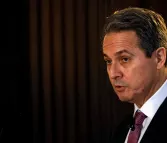
Chicago Fed President Austan Goolsbee argues recent experience should keep policymakers cautious about how easily the economy will adjust to any tariff shock.

"If in 2018 companies shifted all the easiest things out of China, then what’s left might be the least substitutable goods. In that case, the impact on inflation might be much larger this time," Goolsbee said. Neither should the impact on complex and integrated supply chains be downplayed.

While Trump aims to bring those supply chains onto American shores, the pandemic showed how disruptions and lengthy adjustments can produce more persistent inflation pressure.

"The supply side of the economy cannot be an afterthought," Goolsbee said.
  • Topic
  • USA
  • FED/TARIFFS (PIX)
Facebook Twitter Google+ LinkedIn Pinterest
Previous article Fed's Musalem says on CNBC he won't prejudge rate call view for September FOMC

Related Posts

U.S. Markets
August 20th, 2026

Fed's Musalem says on CNBC he won't prejudge rate call view for Septembe...

U.S. Markets
August 20th, 2026

Mapping the Market: A breather, then more gains for US tech shares

U.S. Markets
August 12th, 2026

China's central bank pledges timely new policy rollout

U.S. Markets
August 11th, 2026

Inflation is the biggest problem, Fed's Goolsbee says

U.S. Markets
August 11th, 2026

Atlanta Fed's Venable: Inflation too high, with prospect of easing depen...

U.S. Markets
August 7th, 2026

Gold to reach $5,000 in first half of 2027, UBS says

The Wire
Aug 21st 1 day ago
Government

Trump administration moves to end attorney group's law scho...

Aug 21st 1 day ago
Africa

First migrants buried in Spain's Ceuta after deadly border ...

Aug 21st 1 day ago
Americas

Lula, Trump discuss tariffs in phone call, Brazil says

Aug 21st 1 day ago
World

US plans $725 million payment towards its large UN debt

Aug 21st 1 day ago
Middle East

NATO members discuss Strait of Hormuz options without allia...

TRENDING ON FINANCETIME
Aug 21st, 2026 Americas

Mexican governor accused by US of cartel ties returns to office

Aug 21st, 2026 Middle East

Turkey to seek Interpol notice for Netanyahu in Gaza flotilla case

Aug 21st, 2026 Litigation

Explainer: Why is Trump talking about the Keystone XL oil pipeline?

Aug 21st, 2026 Wealth

Guggenheim fund hits 17-year low after short-seller claims

Aug 21st, 2026 Wealth

Ken Griffin's Citadel sheds over $4 billion of Situational Awareness' bets


  • BUSINESS
  • MARKETS
  • WORLD
  • POLITICS
  • TECH
  • COMMENTARY
  • BREAKINGVIEWS
  • MONEY
  • LIFE
  • SECTORS
  • Back to top
FinanceTime
FinanceTime

World Business & Financial News, Breaking US & International News

Additional Services
  • Privacy-Policy
  • Terms and Conditions
© Financetime.org 2026. All rights reserved. Hosted by LeadsDeposit.com
Produced by C-iT