• BUSINESS
    • FINANCE
    • LEGAL
    • RETAIL & CONSUMER
    • AUTOS & TRANSPORTATION
    • HEALTHCARE & PHARMACEUTICALS
    • MEDIA & TELECOM
    • AEROSPACE AND DEFENSE
    • ENERGY
  • MARKETS
    • EUROPEAN MARKETS
    • ASIAN MARKETS
    • U.S. MARKETS
    • COMMODITIES
    • EMERGING MARKETS
    • DEALS
    • RATES & BONDS
  • WORLD
    • UNITED STATES
    • EUROPE
    • UNITED KINGDOM
    • ASIA PACIFIC
    • MIDDLE EAST
    • AFRICA
    • CHINA
    • INDIA
    • JAPAN
    • AMERICAS
    • FRANCE
    • GERMANY
  • POLITICS
    • GOVERNMENT
    • UNITED STATES
    • US SUPREME COURT
  • TECH
    • ARTIFICIAL INTELLIGENCE
    • CYBERSECURITY
    • SPACE
    • DISRUPTED
  • COMMENTARY
  • BREAKINGVIEWS
    • BREAKINGVIEWS PREDICTIONS
  • MONEY
    • WEALTH
    • FUNDS
    • ETFS
  • LIFE
    • LIFESTYLE
    • SPORTS
    • SCIENCE
  • SECTORS
    • ENERGY
    • HEALTHCARE
    • MEDIA & TELECOM
    • SUSTAINABILITY
    • ENVIRONMENT
    • RETAIL & CONSUMER
    • AUTOS & TRANSPORTATION
    • AEROSPACE AND DEFENSE
FinanceTime
  • August 22nd, 2026

FinanceTimeFinancetime

  • BUSINESS
    • FINANCE
    • LEGAL
    • RETAIL & CONSUMER
    • AUTOS & TRANSPORTATION
    • HEALTHCARE & PHARMACEUTICALS
    • MEDIA & TELECOM
    • AEROSPACE AND DEFENSE
    • ENERGY
  • MARKETS
    • EUROPEAN MARKETS
    • ASIAN MARKETS
    • U.S. MARKETS
    • COMMODITIES
    • EMERGING MARKETS
    • DEALS
    • RATES & BONDS
  • WORLD
    • UNITED STATES
    • EUROPE
    • UNITED KINGDOM
    • ASIA PACIFIC
    • MIDDLE EAST
    • AFRICA
    • CHINA
    • INDIA
    • JAPAN
    • AMERICAS
    • FRANCE
    • GERMANY
  • POLITICS
    • GOVERNMENT
    • UNITED STATES
    • US SUPREME COURT
  • TECH
    • ARTIFICIAL INTELLIGENCE
    • CYBERSECURITY
    • SPACE
    • DISRUPTED
  • COMMENTARY
  • BREAKINGVIEWS
    • BREAKINGVIEWS PREDICTIONS
  • MONEY
    • WEALTH
    • FUNDS
    • ETFS
  • LIFE
    • LIFESTYLE
    • SPORTS
    • SCIENCE
  • SECTORS
    • ENERGY
    • HEALTHCARE
    • MEDIA & TELECOM
    • SUSTAINABILITY
    • ENVIRONMENT
    • RETAIL & CONSUMER
    • AUTOS & TRANSPORTATION
    • AEROSPACE AND DEFENSE
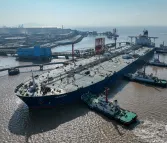
A cargo ship in the Gulf, near the Strait of Hormuz, as seen from northern Ras al-Khaimah, near the border with Oman’s Musandam governance, amid the U.S.-Israeli conflict with Iran, in United Arab Emirates, March 11, 2026.
Home
Markets
Commodities

Crude oil and LNG supply are at risk of the worst-possible scenario

March 30th, 2026 | 00:27 AM MARKETS Commodities 5

Facebook Twitter Google+ LinkedIn Pinterest

Worth reading...

Greek crews fight wildfire northwest of Athens for fourth day
Dangote refinery can be global jet fuel supplier, CEO says
Asia's imports of US crude surge, but can't offset Hormuz losses
US gasoline market set for fresh test after near-record stock draws
By Clyde Russell

A month after U.S. and Israeli strikes on Iran, global markets for the supply of crude oil, refined products and liquefied natural gas are already in the second-worst possible scenario.

Everything hinges on the Strait of Hormuz. This chokepoint, which normally carries around 20% of global crude, products and LNG, is still effectively ​closed to most shipping, leaving energy markets dangerously exposed.

Under those conditions, claims by Washington or Israel that they are somehow winning the war against Iran are largely meaningless.

It may ‌well be true that the U.S. and Israeli air campaign has decapitated Iran's leadership and degraded key military capabilities.

But the reality is that most tankers still cannot transit the Strait of Hormuz safely, while Iran has demonstrated a clear ability to strike energy and other critical infrastructure across the Gulf. That leaves Tehran shaping the narrative - and, more importantly, holding the global economy to ransom at the same time.

What would the worst-case scenario look like?

It would be a sharp escalation in which ​Iran inflicts widespread damage on Gulf energy infrastructure, using missiles and drones to hit pipelines, refineries, processing plants and export terminals across the region.

The likely trigger for such action would be ​U.S. ground forces trying to capture and hold Iranian-controlled territory, such as the Kharg Island oil terminal and small islands in the Strait of Hormuz.

Deploying ground troops ⁠is something that U.S. President Donald Trump is said to be considering and U.S. forces in the region have been building.

But even a militarily successful invasion would be meaningless if it triggers widespread destruction of ​energy infrastructure, escalating an already serious market crisis into an unprecedented global energy disaster.

The crude oil futures market, as shown by Brent contracts , is still largely pricing for a de-escalation and an eventual return to normal ​flows through the Strait of Hormuz.

Brent futures opened higher in early Asian trade on Monday, gaining 2.7% to trade around $115.55 a barrel, up from the close of $112.57 on March 27.

They have now gained 59% since the close of $72.48 a barrel on February 27, the day before the U.S. and Israel attacked Iran.

That may look like a strong rally, but it pales when compared to the physical prices of refined products in Asia, where the biggest impact of the current crisis is ​being felt.

Singapore traded jet fuel ended at $222.77 a barrel on March 27, not far below the record $227.98 hit on March 23 and more than double the $93.45 from February 27.

Gasoil , the building block for diesel, ended ​at $182.76 a barrel on March 27, almost exactly double the $91.42 on February 27, while gasoline finished at $130.52, up 65% from the day before the conflict started.

These prices reflect that Asian refiners are scrambling for sufficient crude to operate, ‌while fuel importers ⁠such as Australia and Indonesia are rushing to secure supplies.

PAIN TO SPREAD

The stress in Asian refined product markets reflects that the fallout from the war in Iran has hit the region first, which isn't surprising given Asia is the destination for around 80% of the crude and refined fuels shipped through the Strait of Hormuz.

But the pain felt in Asia will quickly spread around the world, as refiners and fuel importers pull scarce cargoes from the Atlantic Basin, forcing prices higher well beyond the region.

The problem is that the world is effectively down around 12 million barrels per day (bpd) of crude and refined products.

This is because around 19 ​million bpd has been going through the Strait of ​Hormuz in recent months, a flow that ⁠has now slowed to a trickle, with only a handful of vessels passing through so far in March.

Saudi Arabia's ramping up of exports through ports on the Red Sea and the United Arab Emirates boosting shipments from Fujairah on the Gulf of Oman have mitigated some of the loss of volumes through the ​vital gateway.

But the shock of losing more than 10% of global crude supply cannot be offset by releasing some strategic reserves, at least not over ​the longer term.

The real risk is ⁠that the conflict with Iran drags on, or escalates further, in the weeks ahead.

Imagine a U.S. ground invasion triggering Iranian strikes on the Saudi pipeline to the Red Sea, or on critical facilities at Fujairah.

Or consider Iran's Houthi allies in Yemen effectively closing the Bab el-Mandeb passage between the Red Sea and the Gulf of Aden, a move that would mean Saudi exports could only flow north through the Suez Canal, adding significant time, cost ⁠and congestion for ​cargoes bound for Asia.

The risk is that the crude oil and LNG markets may have to start pricing for a ​sustained loss of supplies from the Middle East, something they have not fully done as yet.

Enjoying this column? Check out Reuters Open Interest (ROI), your essential new source for global financial commentary. ROI delivers thought-provoking, data-driven analysis of everything from swap rates to soybeans. Markets are ​moving faster than ever. ROI can help you keep up. Follow ROI on LinkedIn and X.

The views expressed here are those of the author, a columnist for Reuters.
  • Topic
  • Iran
  • COLUMN
  • CRISIS/OIL
  • RUSSELL (ROI)
Facebook Twitter Google+ LinkedIn Pinterest
Previous article Greek crews fight wildfire northwest of Athens for fourth day

Related Posts

Commodities
August 3rd, 2026

Greek crews fight wildfire northwest of Athens for fourth day

Commodities
June 2nd, 2026

Dangote refinery can be global jet fuel supplier, CEO says

Commodities
June 2nd, 2026

Asia's imports of US crude surge, but can't offset Hormuz losses

Commodities
June 1st, 2026

US gasoline market set for fresh test after near-record stock draws

Commodities
June 1st, 2026

China's crude oil imports slump, but it's economics not altruism

Commodities
May 29th, 2026

Mapping the Market: Gold approaches potential crossroads 

The Wire
Aug 21st 22 h ago
Government

Trump administration moves to end attorney group's law scho...

Aug 21st 22 h ago
Africa

First migrants buried in Spain's Ceuta after deadly border ...

Aug 21st 22 h ago
Americas

Lula, Trump discuss tariffs in phone call, Brazil says

Aug 21st 22 h ago
World

US plans $725 million payment towards its large UN debt

Aug 21st 23 h ago
Middle East

NATO members discuss Strait of Hormuz options without allia...

TRENDING ON FINANCETIME
Aug 21st, 2026 Americas

Mexican governor accused by US of cartel ties returns to office

Aug 21st, 2026 Middle East

Turkey to seek Interpol notice for Netanyahu in Gaza flotilla case

Aug 21st, 2026 Litigation

Explainer: Why is Trump talking about the Keystone XL oil pipeline?

Aug 21st, 2026 Wealth

Guggenheim fund hits 17-year low after short-seller claims

Aug 21st, 2026 Wealth

Ken Griffin's Citadel sheds over $4 billion of Situational Awareness' bets

Markets-Sectors
ENERGY -0.20%
FINANCIALS +0.93%
TECHNOLOGY +0.14%

  • BUSINESS
  • MARKETS
  • WORLD
  • POLITICS
  • TECH
  • COMMENTARY
  • BREAKINGVIEWS
  • MONEY
  • LIFE
  • SECTORS
  • Back to top
FinanceTime
FinanceTime

World Business & Financial News, Breaking US & International News

Additional Services
  • Privacy-Policy
  • Terms and Conditions
© Financetime.org 2026. All rights reserved. Hosted by LeadsDeposit.com
Produced by C-iT