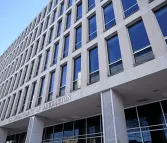

Amazon.com's Whole Foods did not violate U.S. labor law by prohibiting employees from wearing clothing and accessories that said "Black Lives Matter" or "BLM," the National Labor Relations Board has ruled.
The Republican-led board on Friday said that because the supermarket chain's workers who donned Black Lives Matter shirts, face masks and other apparel in 2020 were not protesting their own working conditions, the company had the right to bar their conduct and discipline workers who did not comply.
The Black Lives Matter movement rose to national prominence in 2020 as protests were held across the country in response to the death of George Floyd, an unarmed Black man murdered by a Minneapolis police officer.
The NLRB on Friday also ruled 2-1 that Whole Foods' former dress code, which it had adopted in 2013 as part of a settlement of a separate board case, was not overly broad. That reversed an administrative judge who had said that the policy, which was changed in 2020, was illegal because it did not exactly mirror the language agreed to in the board settlement.
Board member David Prouty, the NLRB's lone Democrat, dissented from that finding. The agreed-to policy read: “You must wear Whole Foods Market shirts/tops ... without any visible slogan, message, logo or advertising printed on them.” But the company ultimately omitted the word "printed," improperly broadening the policy to ban accessories such as pins and buttons, Prouty wrote.
Amazon and Shannon Liss-Riordan, a lawyer for workers who filed complaints against Whole Foods, did not immediately respond to requests for comment on Monday.
The St. Louis-based 8th U.S. Circuit Court of Appeals reversed the Home Depot decision last November, ruling that the policy was justified by the company's need to protect its reputation and the safety of employees and customers. That stopped the NLRB from enforcing its decision against Home Depot, but the board typically does not abandon its own precedent based on a single appeals court ruling and can continue applying it in other cases unless the U.S. Supreme Court rules otherwise.
The board is also reviewing an administrative judge's 2023 ruling that two Kroger subsidiaries broke the law by banning Black Lives Matter apparel.
In 2023, the Boston-based 1st U.S. Circuit Court of Appeals revived a retaliation lawsuit by a Whole Foods worker who was fired from a Massachusetts store after refusing to remove a Black Lives Matter face mask. The court had already tossed out proposed class action claims that Whole Foods' policies amounted to race discrimination.
The case is Whole Foods Market, National Labor Relations Board, No. 01–CA–263079.
For Whole Foods: Jeremy Brown, Adam Forman, Michael Ferrell and Erin Schaefer of Epstein Becker & Green
For the union: Shannon Liss-Riordan, Anastasia Doherty and Maria Cedeno of Lichten & Liss-Riordan
For the NLRB general counsel: Matthew Peterson
Read more:
Home Depot's ban on Black Lives Matter apron was legal, US court says
Home Depot ban on worker's Black Lives Matter apron was illegal, US agency rules
Whole Foods workers lose appeal over 'Black Lives Matter' masks
Whole Foods beats NLRB case over ban on Black Lives Matter apparel
Court revives Whole Foods worker's lawsuit over 'Black Lives Matter' masks