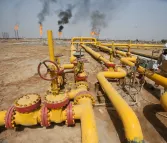
Crude oil flowed on Saturday through a pipeline from the semi-autonomous Kurdistan region in northern Iraq to Turkey for the first time in 2-1/2 years, after an interim deal broke a deadlock, Iraq's oil ministry said.
The resumption started at 6 a.m. local time (0300 GMT), according to a statement from the ministry.
"Operations started at a rapid pace and with complete smoothness without recording any significant technical problems," the ministry said.
US PRESSURE TO RESUME KURDISH FLOWS
Iraq's delegate to the Organization of the Petroleum Exporting Countries, Mohammed al-Najjar, said his country can export more than it is now after the resumption of flows via the Kirkuk-Ceyhan pipeline, in addition to other planned projects at Basra port, state news agency INA reported on Saturday.
"OPEC member states have the right to demand an increase in their (production) shares especially if they have projects that led to an increase in production capacity," he said.
Iraq, the group's largest overproducer, was among states that submitted updated plans to OPEC in April to make further oil output cuts to compensate for pumping above agreed quotas.
Flows through the Kirkuk-Ceyhan pipeline were halted in March 2023 when the International Chamber of Commerce ordered Turkey to pay Iraq $1.5 billion in damages for unauthorised exports by the Kurdish regional authorities.
Turkish Energy Minister Alparslan Bayraktar also confirmed the resumption of oil exports to Turkey from Iraq in a post on X.
The preliminary plan, agreed last Wednesday, calls for the KRG to commit to delivering at least 230,000 bpd to Iraq's state oil marketer SOMO, while keeping an additional 50,000 bpd for local use, according to Iraqi officials with knowledge of the agreement.
An independent trader will handle sales from the Turkish port of Ceyhan using SOMO's official prices.
For each barrel sold, $16 is to be transferred to an escrow account and distributed proportionally to producers, with the rest of the revenue going to SOMO, the officials said.
Norway's DNO (DNO.OL) said it had no immediate plans to export through the pipeline but that its local buyers could still ship its crude through it. The company and its joint venture partner Genel Energy (GENL.L) have said the issue of Kurdistan's around $1 billion in arrears to producers, of which DNO is owed about $300 million, needs to be addressed.